The Art
Flying Over Time Collection
Explore Nova Hall’s mixed-media paintings, sculptures, and works on paper inspired by aviation history, family archives, and the imagination.
Explore the Flying Over Time Collection
37 images from the Flying Over Time Collection. Search captions and descriptions, and open any image to view it in full. All images Copyright Nova Hall.
37 images
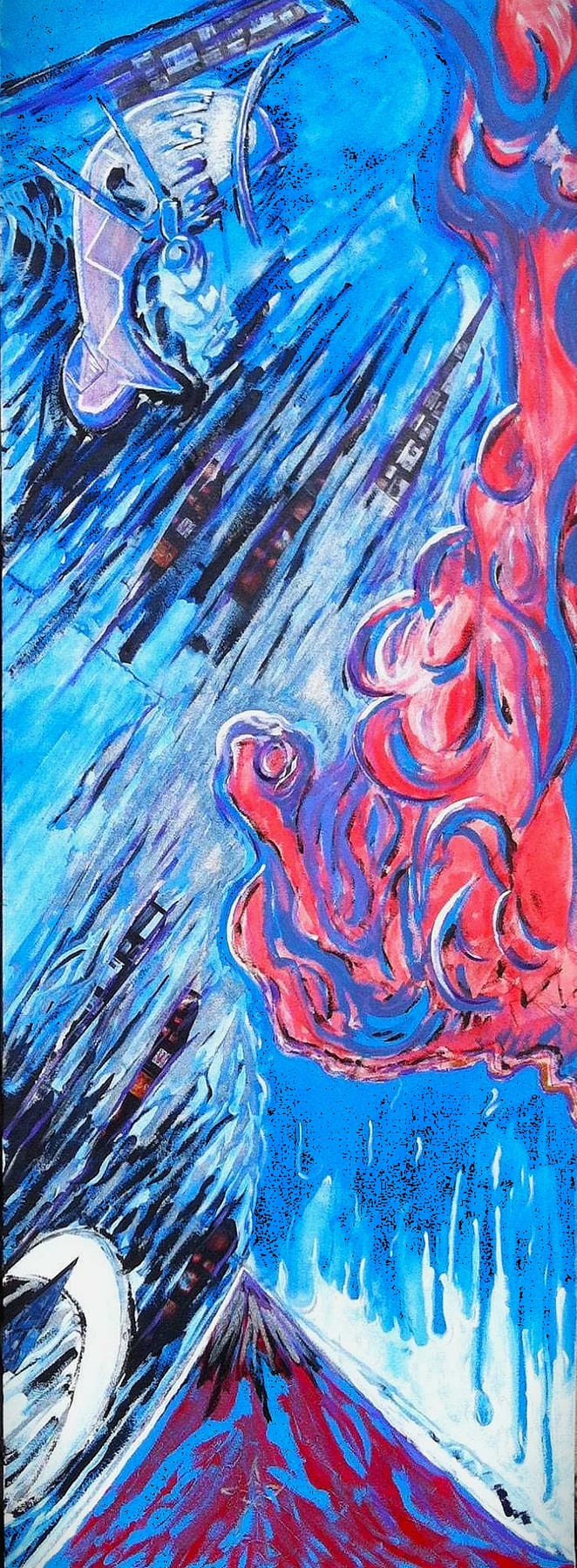
Towering at an overwhelming 8 feet tall and 3 feet wide, San Francisco Peaks is a colossal vertical narrative that visualizes Donald A. Hall Sr.’s greatest, secret fear. While history fixates on the Atlantic, Hall was terrified of the deadly, high-altitude springtime thunderstorms near Flagstaff, Arizona, knowing the Spirit of St. Louis lacked the ceiling to fly over them. The canvas is a violent, vertical shear of freezing blue skies and a massive, churning red thunderhead threatening to swallow the silver monoplane. Grounded by the red, jagged peaks at the base and embedded with authentic estate film strips falling like rain, the painting investigates the chilling realization that the flight’s most lethal threat lurked not over the ocean, but over the American Southwest. Viscerally executed in the Arte Povera tradition, it is a masterclass in scale and historical suspense.
Nova Hall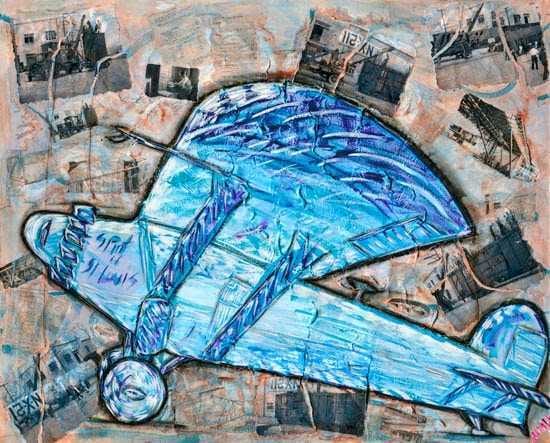
A monumental 40-by-50-inch masterwork, this canvas thrusts the Spirit of St. Louis into a bold, contemporary light. The aircraft is rendered in electric, sweeping strokes of azure and cobalt, contrasting sharply against a heavily textured background built from authentic 1927 engineering blueprints, period newsprint, and original Donald A. Hall Estate photographs. Channeling Robert Rauschenberg’s assemblage techniques and the resourcefulness of Arte Povera, the physical canvas becomes a historical artifact itself. The collage elements—showing the skeletal construction of the aircraft and the men who built it—bleed through the pigment, guided by the structural and emotional methodologies imparted by Leandro Soto. It is a striking visual paradox: the cold, mathematical precision of aerospace engineering fused with the passionate, fluid movement of fine art.
Nova Hall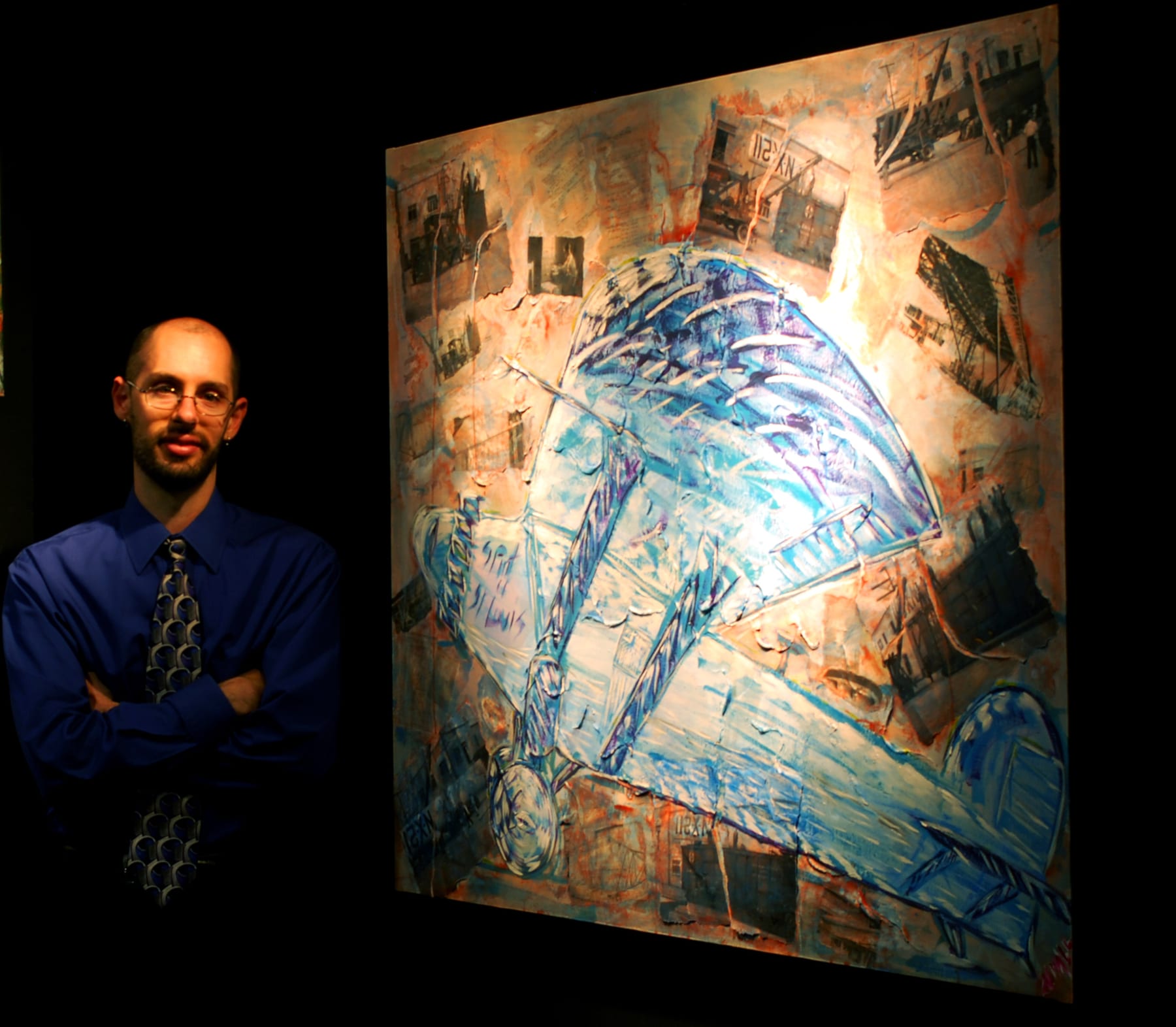
A monumental 40-by-50-inch masterwork, this canvas thrusts the Spirit of St. Louis into a bold, contemporary light. The aircraft is rendered in electric, sweeping strokes of azure and cobalt, contrasting sharply against a heavily textured background built from authentic 1927 engineering blueprints, period newsprint, and original Donald A. Hall Estate photographs. Channeling Robert Rauschenberg’s assemblage techniques and the resourcefulness of Arte Povera, the physical canvas becomes a historical artifact itself. The collage elements—showing the skeletal construction of the aircraft and the men who built it—bleed through the pigment, guided by the structural and emotional methodologies imparted by Leandro Soto. It is a striking visual paradox: the cold, mathematical precision of aerospace engineering fused with the passionate, fluid movement of fine art.
Nova Hall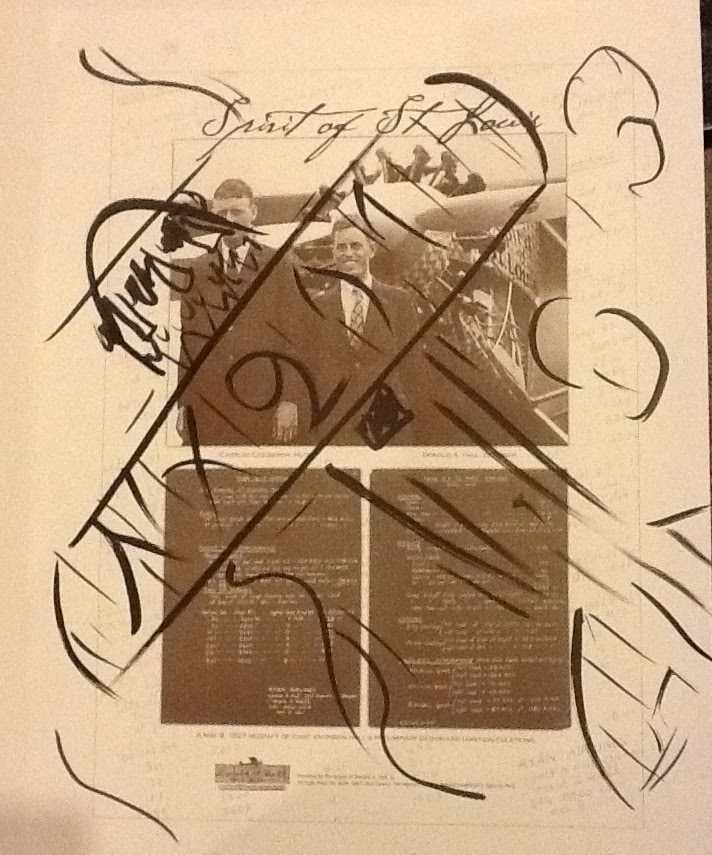
Sumi Spirits #1 is a radical departure in medium but a profound continuation of legacy, representing the deep, traditional Asian brushwork techniques imparted to Nova Hall by master painter Leandro Soto. The canvas is replaced by a highly collectible, archival sepia-toned print detailing the engineering specifications and historical photographs of the Spirit of St. Louis team. Slashing across this pristine historical record are heavy, visceral, and immediate strokes of black sumi ink, forming abstract, ghostly profiles that dominate the composition. Echoing the emotional liberty of Marc Chagall and Vincent Van Gogh, the swift ink gestures breathe wild, contemporary life into the rigid technical data. Stamped with a traditional red ink signature, the piece bridges ancient artistic discipline with 1920s aerospace innovation.
Nova Hall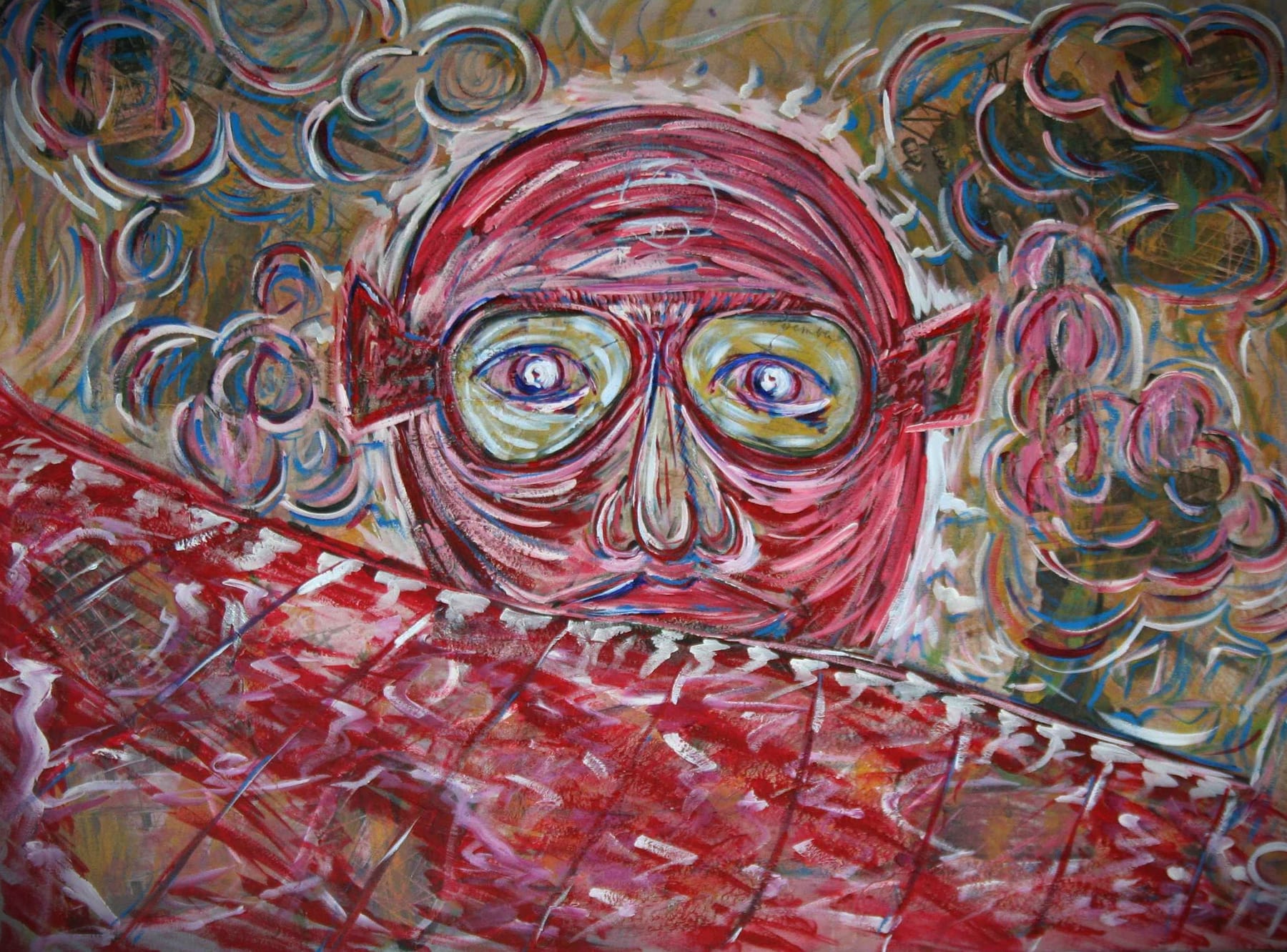
A colossal 36-by-48-inch masterwork, The Aviator is the explosive, grand-scale evolution of the foundational Lindy portrait. Charles Lindbergh’s face, rendered in feverish, layered crimsons and ochres drawn from the emotional palettes of Marc Chagall, peers out from behind oversized flight goggles. Below him, a stark red geometric grid—representing Donald A. Hall Sr.’s unforgiving aerodynamic math and wing structures—anchors the chaotic, swirling sky. True to the raw ethos of Arte Povera instilled by Leandro Soto, the aggressive pigment bleeds heavily over the canvas boundaries and directly onto the physical frame. The surface is heavily scarred with embedded historical documents from the Donald A. Hall Estate, utilizing Robert Rauschenberg’s assemblage techniques to physically trap the myth of the aviator within the undeniable paper trail of the engineer.
Nova Hall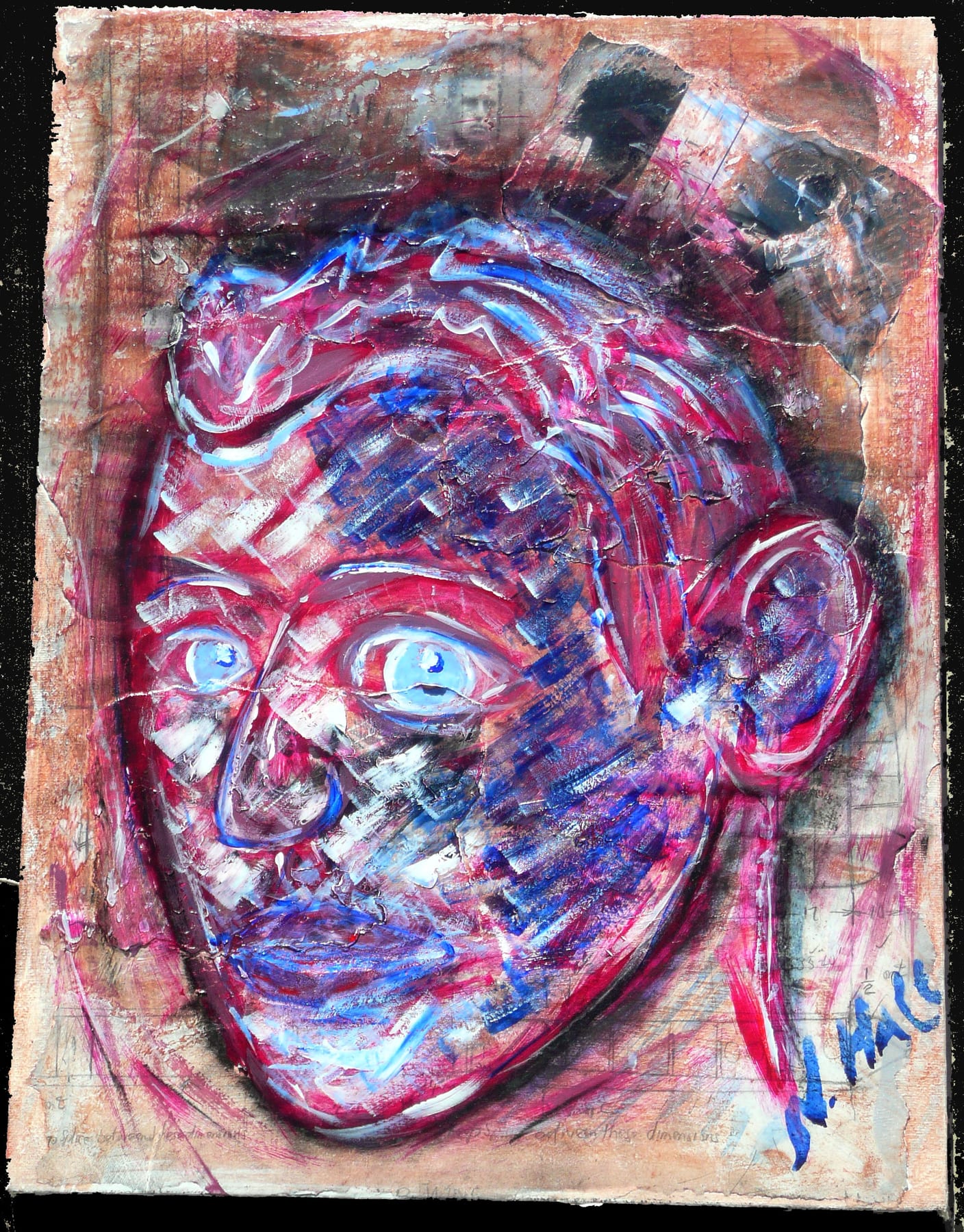
A psychological masterwork measuring 16 by 12 inches, The Chief Engineer is Nova Hall’s ultimate, visceral tribute to his grandfather, Donald A. Hall Sr. The canvas vibrates with intense, cross-hatched strokes of crimson, magenta, and electric blue—channeling the profound emotional palettes of Marc Chagall to depict a young man on the precipice of changing the world. The piercing, luminous blue eyes are painted with the exact intensity found in the 1927 archival photographs. Hovering at the crown of the composition, embedded directly into the substrate via Robert Rauschenberg’s assemblage techniques, are the authentic, torn photographs that inspired the work. Watched over by mentor Leandro Soto—who recognized the piece's innate perfection and offered zero corrections—the painting embraces the unpolished, raw materiality of Arte Povera to capture the brilliant, burning intellect of aviation’s forgotten architect.
Nova Hall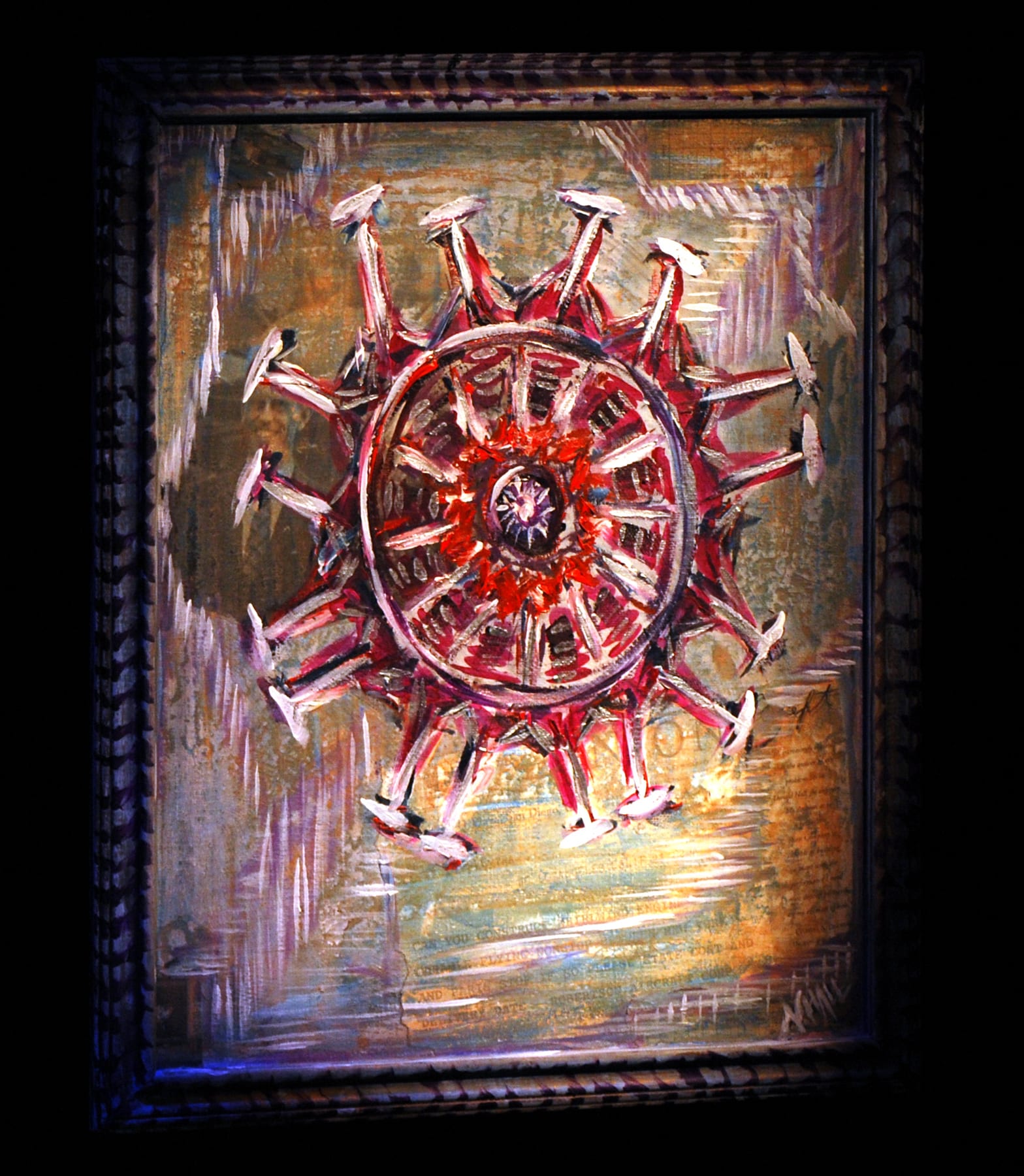
Pulsing with kinetic, mechanical energy, this 22-by-18-inch canvas immortalizes the beating heart of the Spirit of St. Louis—the Wright Whirlwind J-5c engine. Painted in aggressive, radial strokes of blood-red and stark white, the engine block and steel propeller burst forward from a deeply textured, shadowy background. The substrate is armored in authentic 1927 texts and aerospace documentation from the Donald A. Hall Estate, executing Robert Rauschenberg’s ideals of historical assemblage. The thick, unrefined application of pigment bleeding directly onto the recycled frame is a textbook realization of Arte Povera, forged under the direct influence of Leandro Soto. Contrasting the cold metal of 1920s aviation technology against the fiery, emotional palettes of Marc Chagall, the piece visually explains why Donald Hall—with his extensive prior Bellanca experience—knew this specific engine was the only choice to conquer Raymond Orteig’s impossible transatlantic challenge.
Nova Hall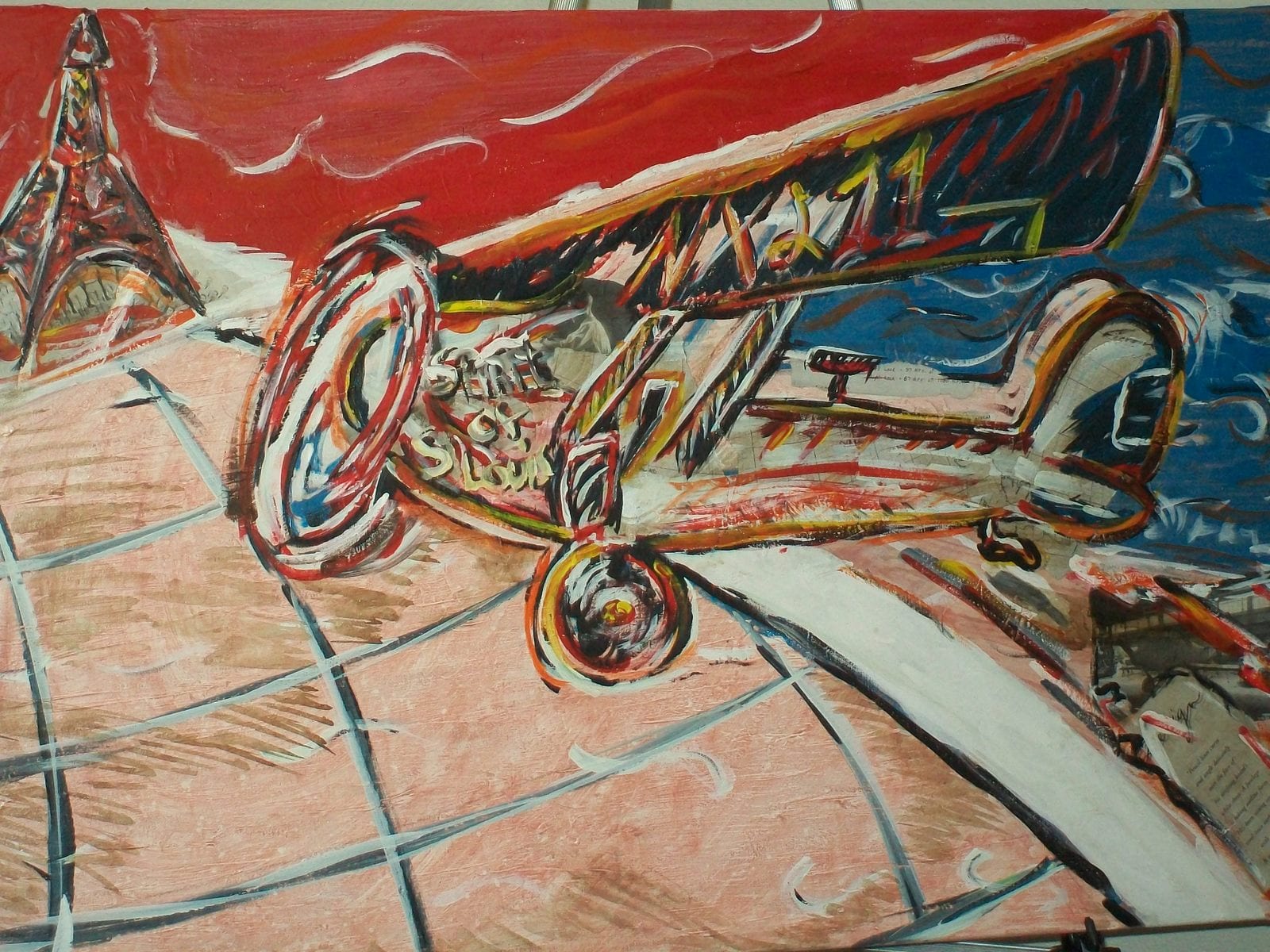
Dynamic and kinetic, Trans-Atlantic captures the perilous velocity of the 1927 flight. The Spirit of St. Louis banks aggressively over a skeletal, geometric grid—a visual representation of Donald A. Hall Sr.’s unforgiving aerodynamic calculations and the latitude lines of the unforgiving ocean. In the distance, the Eiffel Tower rises against a turbulent, Chagall-esque crimson sky, marking the impossible destination. Embedded directly into the lower right quadrant are fragments of authentic 1927 text, anchoring the piece in Robert Rauschenberg’s tradition of historical assemblage. The raw application of paint and integrated ephemera showcase the Arte Povera principles championed by mentor Leandro Soto, creating a visceral sense of speed, isolation, and ultimate triumph.
Nova Hall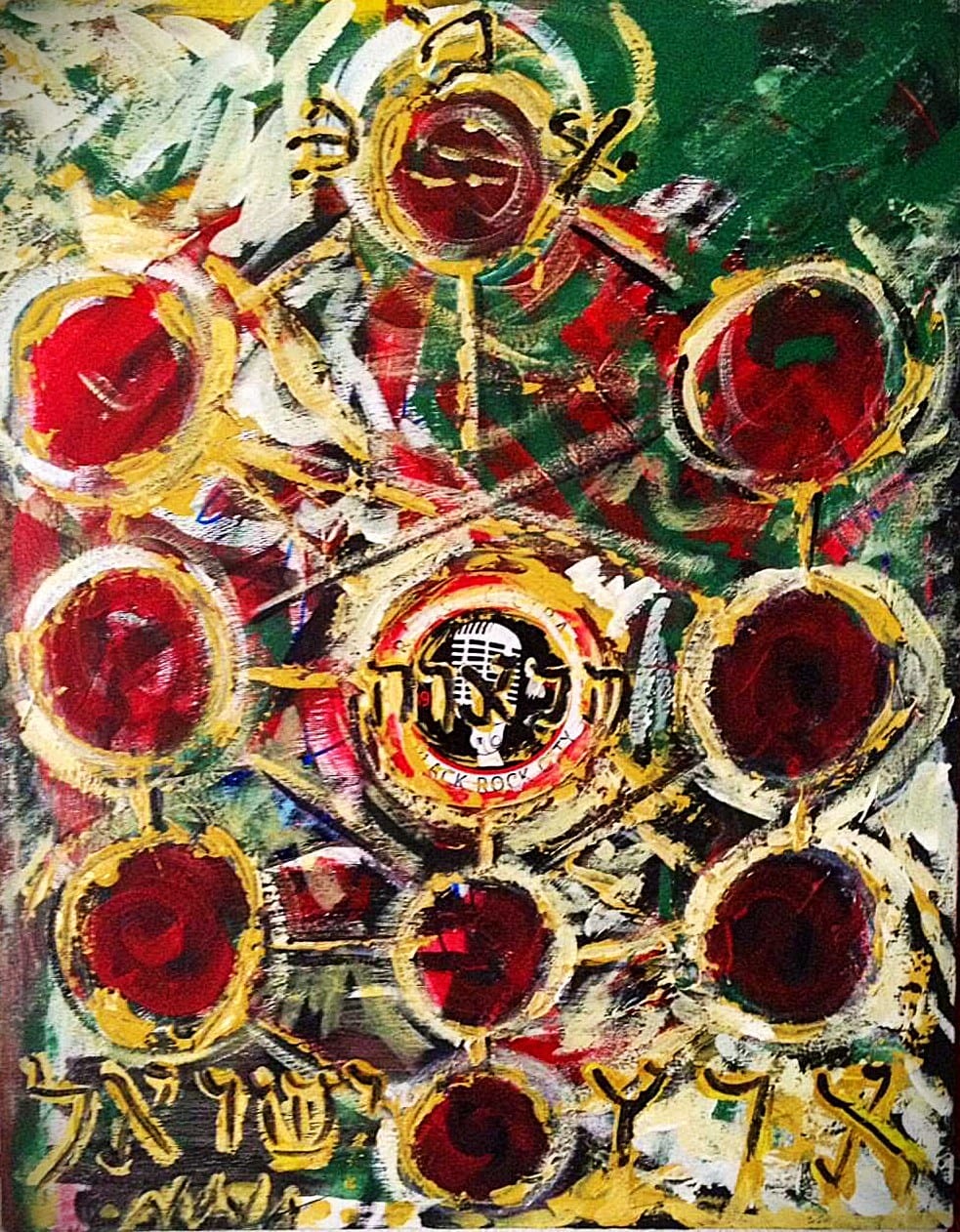
A profound philosophical departure from the aviation archives, Tree of Life #1 plunges into the existential and spiritual depths of the Kabbalistic sephirot. Influenced heavily by the artist's counseling with Rabbi Lee of Hillel and the transcendent culture of Burning Man, the canvas features the ten interconnected nodes of the Tree of Life, burning in rich, Chagall-esque crimsons and golds against a turbulent forest-green background. Heavy, textured Hebrew script roots the bottom of the composition. Continuing the methodologies of mentor Leandro Soto, Nova utilizes the raw, unrefined material layering of Arte Povera and the chaotic assemblage style of Robert Rauschenberg to create a painting that feels less like a modern canvas and more like an excavated, ancient religious artifact pulsing with surviving energy.
Nova Hall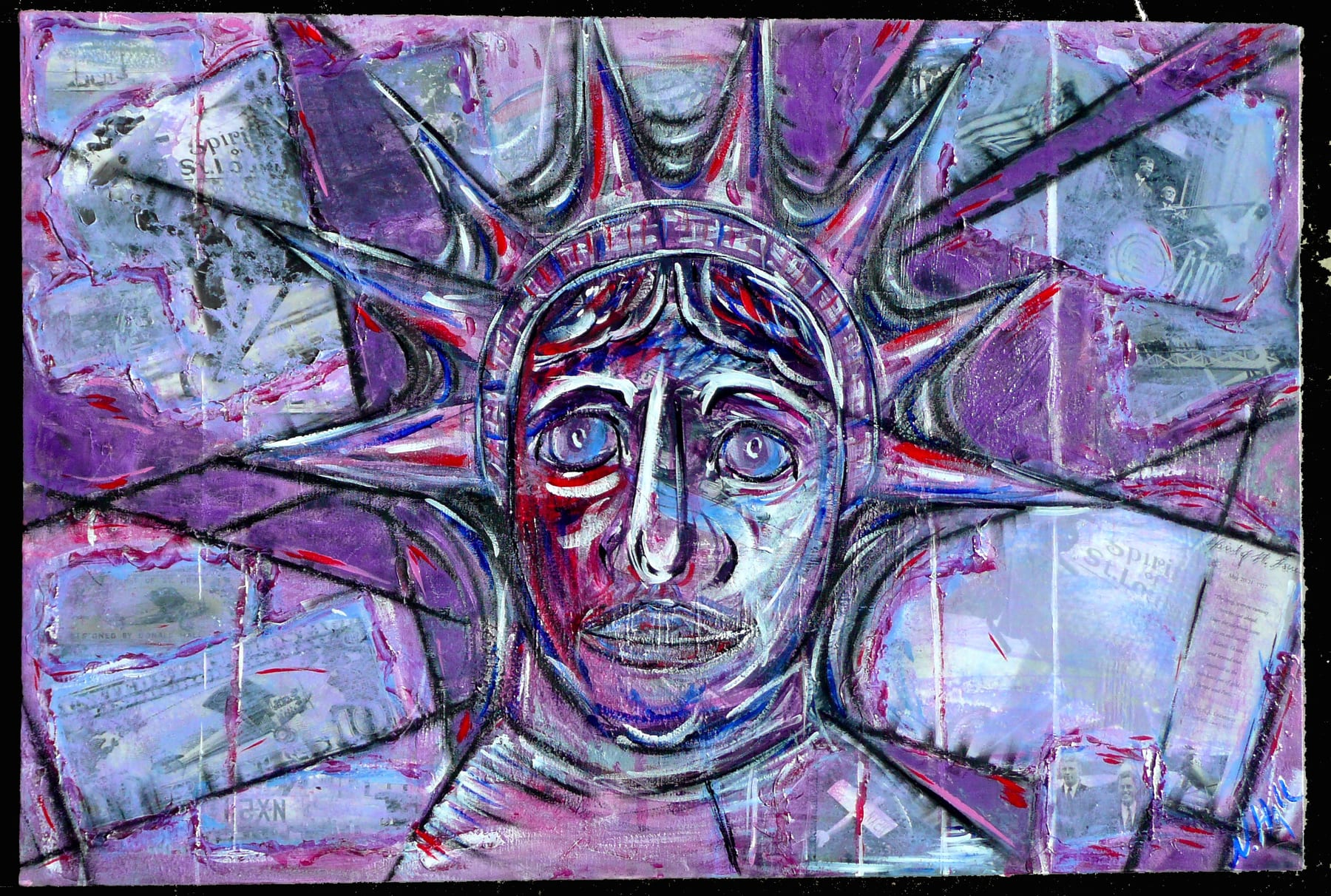
An intensely psychological work, Triumph fractures the ultimate symbol of American arrival. Painted directly over a hidden, pre-existing canvas under the guidance of Leandro Soto, the piece presents the Statue of Liberty shattered like a stained-glass window. Heavy, black assemblage lines splinter the canvas into geometric shards of vibrant violet and stark white. Trapped within these fragmented panes are authentic, historical photographs from the Donald A. Hall Estate Archive, capturing the Spirit of St. Louis and the men behind it. The artwork is a profound visual metaphor for the fractured nature of fame and memory—how a singular historical triumph is pieced together from dozens of shattered, forgotten perspectives. Deeply experimental and tragically stolen from Sun Studios in Tempe, it remains one of the most conceptually vital works in the collection.
Nova Hall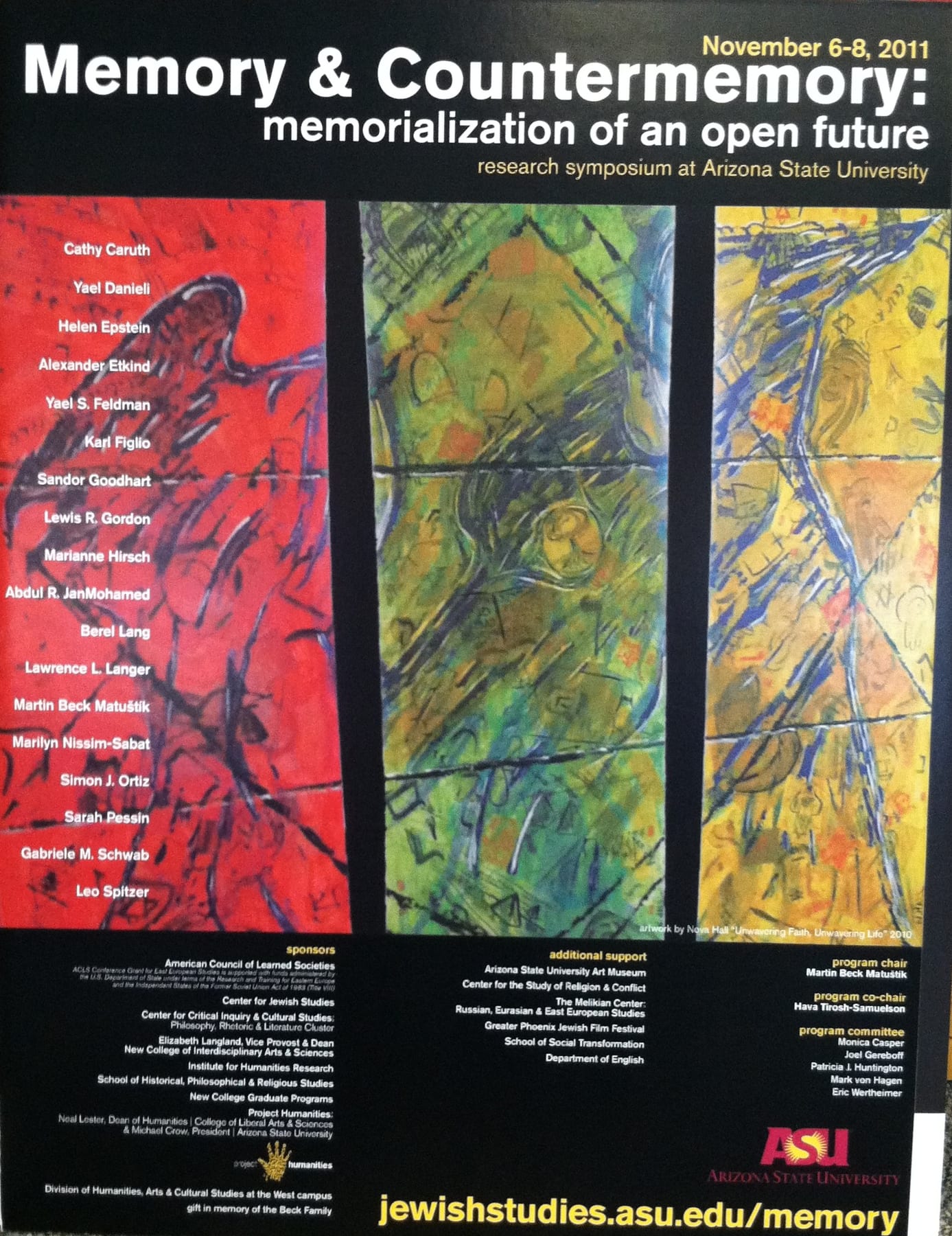
A staggering, monumental triptych, Unwavering Faith, Unwavering Life consists of three 8-foot-tall panels that redefine the narrative of Jewish history. Commissioned through a prestigious grant and unveiled at the Tempe Center for the Arts, the work was conceptually revolutionized after Nova Hall toured the Skirball Museum, choosing to focus on millennia of flourishing family life rather than being defined solely by the atrocities of the Reich. The panels are saturated in deeply symbolic hues: Red (the feminine, the bloodshed), Green (the child, rebirth), and Yellow (the masculine). Towering over these vibrant backgrounds are masterful, fluid sumi-e ink figures and Stars of David, taught by mentor Leandro Soto. Subversively, the enormous "tablets" are textured with the actual, physically reversed stamps of Nazi Germany—crushing the symbols of hate beneath the enduring, vibrant brushstrokes of cultural survival.
Nova Hall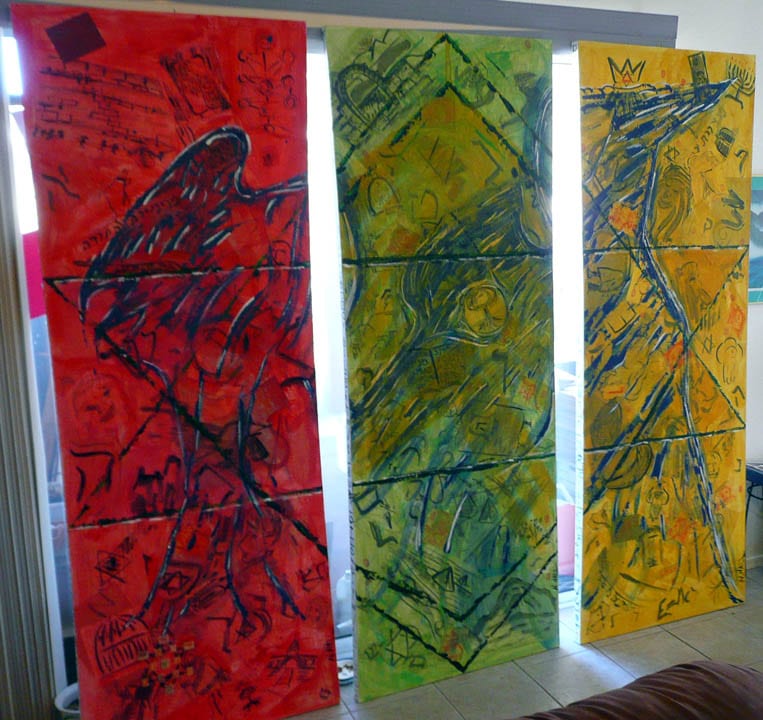
A staggering, monumental triptych, Unwavering Faith, Unwavering Life consists of three 8-foot-tall panels that redefine the narrative of Jewish history. Commissioned through a prestigious grant and unveiled at the Tempe Center for the Arts, the work was conceptually revolutionized after Nova Hall toured the Skirball Museum, choosing to focus on millennia of flourishing family life rather than being defined solely by the atrocities of the Reich. The panels are saturated in deeply symbolic hues: Red (the feminine, the bloodshed), Green (the child, rebirth), and Yellow (the masculine). Towering over these vibrant backgrounds are masterful, fluid sumi-e ink figures and Stars of David, taught by mentor Leandro Soto. Subversively, the enormous "tablets" are textured with the actual, physically reversed stamps of Nazi Germany—crushing the symbols of hate beneath the enduring, vibrant brushstrokes of cultural survival.
Nova Hall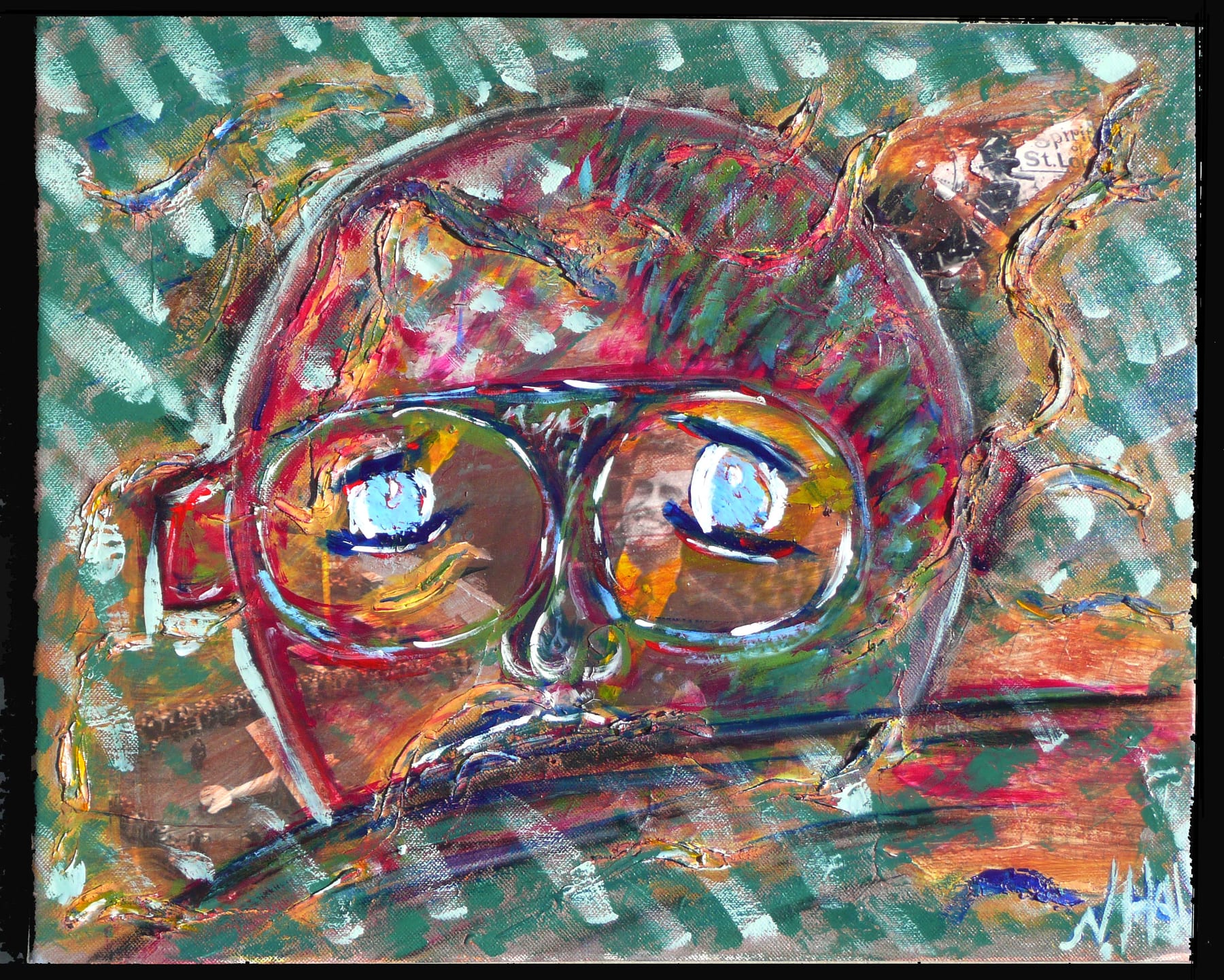
A direct conceptual descendant of Lindy, Visions plunges into the psychological abyss of the 33.5-hour transatlantic flight. Measuring 16 by 20 inches, the portrait of Charles Lindbergh is heavily distorted, rendered in feverish, swirling strokes of crimson, green, and gold. The aviator's oversized goggles dominate the composition, reflecting not the sky, but the literal and figurative ghosts he encountered during the longest night of his life. Embedded within the erratic, textured acrylic are authentic fragments of the Donald A. Hall Estate Archive, grounding Lindbergh's sleep-deprived hallucinations in historical reality. Cultivated under the mentorship of Leandro Soto, the piece uses the chaotic layering of Arte Povera to visualize the frayed edges of human endurance and the surreal intersection of man and machine.
Nova HallResearch, permissions, and image requests
Donna Segura, Media Director · media@oleanderpr.com