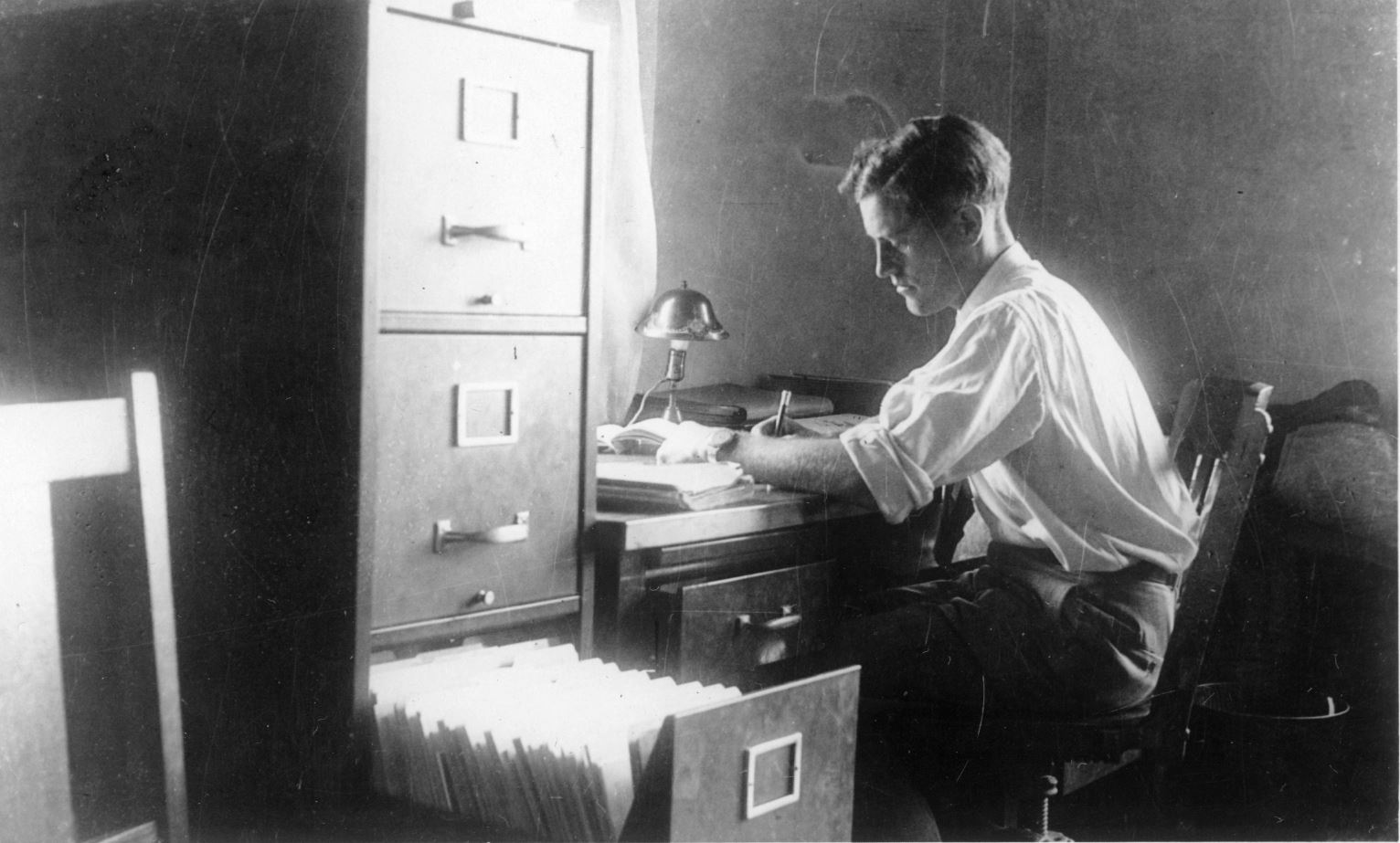
Donald A. Hall Sr. · 1898–1968
Donald A. Hall Sr.
The engineer behind the Spirit of St. Louis. A life spanning aircraft design, photography, military and technical service, patents, and experimental research.
Donald A. Hall Sr. Biography and Introduction
Born in Brooklyn, New York, on December 7, 1898, Donald Albert Hall trained in industrial mechanical engineering at Pratt Institute. His early career took him through Curtiss Aeroplane & Motor Corporation, Elias & Brothers, Douglas, and Ford’s airplane division before he became chief engineer at Ryan Airlines in San Diego.
At Ryan, Hall designed the Spirit of St. Louis for Charles A. Lindbergh. The aircraft carried Lindbergh from Roosevelt Field on Long Island to Le Bourget near Paris on May 20–21, 1927, completing the first solo nonstop transatlantic flight and winning the Orteig Prize. Hall documented the engineering in the National Advisory Committee for Aeronautics’ Technical Note No. 257, “Technical Preparation of the Airplane ‘Spirit of St. Louis.’”
Hall’s work extended well beyond that one airplane. He developed the Hall X-1 “Aft-Wing,” worked in aerodynamics, preliminary design, and patents at Consolidated Vultee/Convair, and later supervised helicopter engineering at Naval Air Station North Island. He died in San Diego, California, on May 2, 1968.
The estate’s account presents a career built on disciplined observation: studying motion, loads, vibration, and performance, then turning those observations into designs, measurements, and a photographic record. The chronology below draws on the executive briefing prepared by Nova Hall, Trustee of the Donald A. Hall Estate Collection.
Invention and engineering
Patents and original documents
The estate briefing highlights three patents under Donald A. Hall’s name and one separate patent by Donald A. Hall Jr. Each entry links to a searchable record and the original patent scan.
U.S. Patent 1,895,458 — Aircraft
Issued January 31, 1933; filed August 9, 1929. The record names Donald A. Hall of San Diego, California. It describes an aircraft configuration intended to improve stability, with fore and aft lifting surfaces, and documents the tandem-wing work associated with the Hall X-1.
Read the patent record (opens in a new tab) · Download the original patent PDF (opens in a new tab)
U.S. Patent 2,925,008 — System for Synchronizing an Event with a Camera
Issued February 16, 1960; filed January 20, 1958. A system for timing an event to coincide with the operation of a high-speed motion-picture camera. The record names Donald A. Hall of Annapolis, Maryland, and assigns the invention to the United States, represented by the Secretary of the Navy. The estate briefing attributes this patent to Hall Sr.; the patent itself does not include a generational suffix.
Read the patent record (opens in a new tab) · Download the original patent PDF (opens in a new tab)
U.S. Patent 3,019,073 — Velocity Measuring Device
Issued January 30, 1962; filed January 21, 1959. An optical system for recording the velocity and flight position of a projectile or another controlled object traveling along a direct path. This record also names Donald A. Hall of Annapolis, Maryland. It is included here with the attribution supplied by the estate briefing.
Read the patent record (opens in a new tab) · Download the original patent PDF (opens in a new tab)
Related family record: U.S. Patent 3,287,029 — Multiple Card
Issued November 22, 1966; filed May 19, 1965. This patent explicitly names Donald A. Hall Jr. of San Diego. It describes a folded card that can be perforated as duplicate layers and separated for tabulation. It belongs to Hall Jr.’s record and is not counted among the patents attributed to Hall Sr.
Read Hall Jr.’s patent record (opens in a new tab) · Download the original patent PDF (opens in a new tab)
1898–1926
Formation of an engineer
Mechanical training, structural calculation, early aircraft laboratories, and practical flight experience.
- 1898
Brooklyn beginnings
Born December 7 in Brooklyn, New York. His education included Manual Training High School.
- 1918–1919
Army service and Pratt Institute
Served as a private in the Students’ Army Training Corps. The estate briefing dates his certificate in Industrial Mechanical Engineering from Pratt Institute to 1919.
- 1919–1921
Curtiss Aeroplane & Motor Corporation
Worked in the advanced laboratory and wind tunnel in Garden City, Long Island, progressing from junior draftsman and checker to aerodynamic design.
- 1921–1922
G. Elias & Brother
Acting chief engineer in Buffalo at age twenty-two. The estate briefing credits his Elias XNBS-3 night bombardment biplane design with a prize in the Army’s 1922 competition at McCook Field.
- Early 1920s
L.W.F. Engineering Company
Airframe calculations and structural design in College Point, New York.
- 1924
Douglas and the World Cruisers
Joined Douglas in Santa Monica as an aerodynamics engineer during the World Cruiser period. The estate account describes work with Jack Northrop on cantilever designs and lifting-surface mathematics.
- 1926
Ford’s airplane division
Airframe design work on the development of the Ford Tri-Motor.
- 1926
Flying cadet at Brooks Field
Entered Army Air Corps flight training in San Antonio, bringing practical flight experience to his engineering work. Returned to Douglas afterward.
Photography as a working record
Photography ran alongside Hall’s engineering. The estate briefing describes instruction from his father, a professional photographer, and a practice that included darkroom work, aircraft prototypes, and photographs made from open cockpits during flight training.
At Ryan, Hall photographed the fabrication of the Spirit of St. Louis. His negatives and prints preserve people, tools, structures, and intermediate stages that a finished aircraft cannot show on its own. They remain a central part of the Donald A. Hall Collection.
1927–1940s
The Spirit, independent design, and national defense
- January 31, 1927
Chief engineer at Ryan Airlines
Joined the San Diego company as its full-time chief engineer and parts inspector.
- 1927
Sixty days to the Ryan NYP
Designed the aircraft that became the Spirit of St. Louis within the project’s sixty-day design-and-build schedule, meeting the demands of a heavy fuel load and a transatlantic flight.
- July 1927
NACA Technical Note No. 257 (opens in a new tab)
Published Technical Preparation of the Airplane “Spirit of St. Louis,” recording the aircraft’s design, specifications, weights, and performance.
- 1929–1936
Hall Aeronautical Development Company
President and chief engineer in San Diego, developing private aircraft and the patented tandem-wing configuration associated with the Hall X-1.
- January 31, 1933
Aircraft patent issued (opens in a new tab)
U.S. Patent 1,895,458 records Hall’s fore-and-aft lifting-surface aircraft design.
- 1936
Consolidated Aircraft
Joined the San Diego company, later part of Convair, in aerodynamics and preliminary design.
- World War II
B-24 Liberator engineering
The estate briefing describes structural problem-solving on the B-24 production line, including wing loads and stress distribution.
- Postwar
Patent administration
Served as patent director at Convair. The estate account describes responsibility for intellectual property relating to advanced aircraft and defense engineering.
Further accounts in the estate record
Nova Hall’s executive briefing also records private aerodynamic consultations with Howard Hughes during the 1930s and 1940s, and postwar technical intelligence work associated with Operation Lusty and Project Paperclip. These accounts are presented as part of the estate’s history; the linked patents document specific inventions rather than independently establishing those assignments.
Later career and recognition
Research, technical service, and legacy
- 1949–1963
Naval Air Station North Island
The estate chronology records Hall as head supervisor of the Helicopter Engineering Branch, working on rotor vibration and structural fatigue.
- 1953
Lindbergh’s technical appendix
Prepared the technical engineering appendix for Charles A. Lindbergh’s Pulitzer Prize-winning book, The Spirit of St. Louis.
- 1937–1968
Professional fellowship
The estate records thirty-one years of professional fellowship culminating in AIAA Associate Fellow status. The period spans AIAA and its predecessor era; AIAA itself was formed in 1963.
- Recognition
First Century Award
The estate briefing records an award bearing the signatures of General Jimmy Doolittle and T. C. Ryan.
- May 2, 1968
An enduring technical collection
Died in San Diego, leaving photographs, engineering papers, correspondence, and other materials now stewarded by the Donald A. Hall Estate and Flying Over Time.
The bullwhip experiment
The briefing connects Hall’s work in high-speed observation with the 1958 paper On the Dynamics of a Bull Whip, by Barry Bernstein, Donald A. Hall, and Horace M. Trent, published in The Journal of the Acoustical Society of America, volume 30, issue 12, pages 1112–1115.
The paper explains the crack of a whip as a shock wave produced when its tip exceeds the speed of sound. That explanation replaces the familiar idea that the report comes simply from leather striking leather. The experiment brings together motion, measurement, and a question drawn from everyday experience.
Read the journal article (opens in a new tab) · Persistent DOI link (opens in a new tab)
A grandson meets his grandfather through the evidence.
Nova Hall never met his grandfather. Years later, he rediscovered a trunk containing Donald A. Hall’s photographs, papers, and engineering records. Those materials became part of the Donald A. Hall Collection and helped carry Hall’s story into Nova’s book, Spirit & Creator, exhibitions, art, and public programs.
Flying Over Time preserves the Collection so that researchers, students, and visitors can encounter the drawings, correspondence, photographs, and design decisions behind the history. Explore the Donald A. Hall Collection or learn about Spirit & Creator.
Sources and further reading
The career narrative draws primarily on Historical and Engineering Footprint of Donald A. Hall Sr., an executive briefing prepared by Nova Hall, Trustee of the Donald A. Hall Estate Collection, and on Flying Over Time’s preserved original biography. Estate accounts are identified where the linked public documents do not independently establish the detail.
- NACA Technical Note No. 257 — NASA catalog (opens in a new tab)
- Technical Preparation of the Airplane “Spirit of St. Louis” — original 1927 PDF (opens in a new tab)
- History of AIAA and its predecessor societies (opens in a new tab)
- Film playlist featuring Donald A. Hall Sr. (opens in a new tab)
For research access, source documents, or corrections, contact Flying Over Time.